
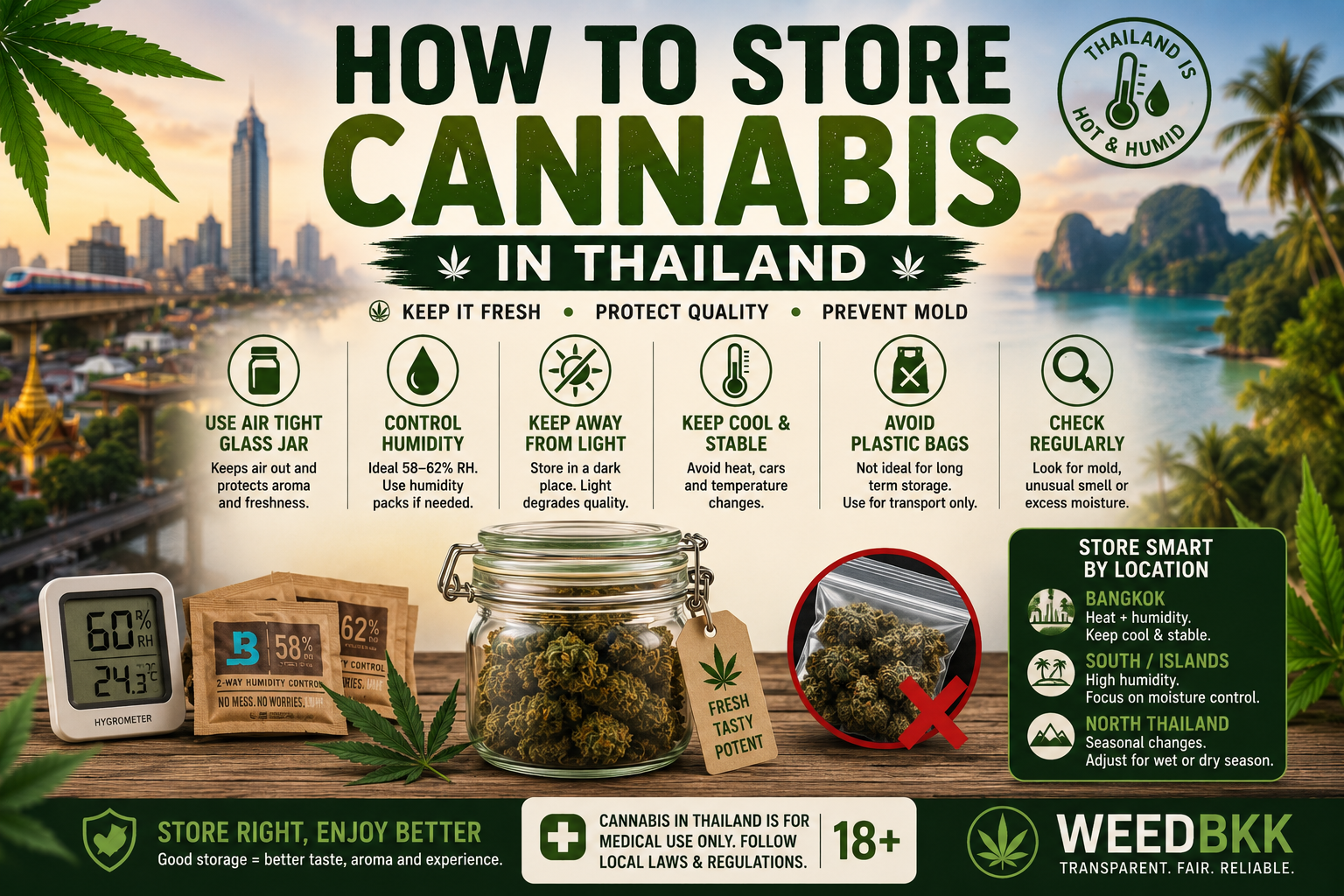
Learning how to store cannabis in Thailand is more important than many buyers realize. Advice written for Europe or North America does not always translate perfectly to Bangkok, Pattaya, Phuket, Koh Samui, or other parts of Thailand. High temperatures, tropical humidity, strong sunlight, and seasonal rain can all make poor storage particularly damaging.
The challenge is finding a balance. Cannabis that becomes excessively dry can lose aroma and quality, while too much moisture creates a much more serious concern: mold. Heat and sunlight can accelerate deterioration as well. Simply putting flower into a plastic bag and leaving it in a Bangkok hotel room, parked car, or beach bag is therefore far from ideal.
There are regional differences too. Bangkok combines heat with persistent humidity and heavily air-conditioned indoor environments. Phuket and Thailand’s southern islands face strong maritime humidity. Chiang Mai and northern Thailand have greater seasonal changes, including cooler and drier periods. This guide explains how those conditions affect cannabis storage and what practical steps can reduce heat, humidity, sunlight, and mold problems.
Important: Thailand’s cannabis market is currently medical-focused and cannabis flower is a controlled herb. Follow current Thai medical and prescription requirements. This article concerns safe storage and product preservation for cannabis that is legally possessed.
Contents:
- How to Store Cannabis in Thailand: Why Is the Climate a Problem?
- Glass Jar vs Plastic Bag: What’s Best in Thailand?
- What Humidity Is Best and How Do You Prevent Mold?
- Should You Put Cannabis in the Refrigerator in Thailand?
- Bangkok vs Phuket vs Chiang Mai: Does Cannabis Storage Change?
- How Can You Tell If Cannabis Has Gone Bad or Moldy?
- How Long Does Cannabis Last in Thailand?
How to Store Cannabis in Thailand: Why Is the Climate a Problem?
Thailand’s combination of heat and humidity is the main storage challenge. Cannabis is plant material, and after harvesting and curing it continues to react to its environment. Temperature, moisture, oxygen, and light can all affect how quickly its condition changes.
Heat is particularly relevant in Thailand. A room that feels acceptable while the air conditioner is running can become considerably warmer after the AC is switched off. Cars, balconies, window ledges, and rooms receiving direct afternoon sunlight can become hotter still. Leaving cannabis in those environments can accelerate deterioration.
Humidity creates a different problem. Properly cured flower contains some moisture, but cannabis that becomes excessively damp can create conditions favorable to mold. Thailand’s rainy season and naturally humid atmosphere make moisture management more important than it may be in a dry climate.
At the same time, trying to remove all moisture is not the solution. Extremely dry cannabis can become brittle and lose much of the aroma and character people associate with fresh flower. The goal is therefore not simply “keep it dry.” The goal is stable, controlled storage.
Sunlight should also be avoided. A transparent container may look attractive on a shelf, but storing it in direct sunlight exposes the contents to both light and additional heat. A dark cupboard or drawer in a reasonably stable indoor environment is usually much more appropriate.
Takeaway: Thailand’s storage problem is about balance: protect cannabis from excessive humidity without over-drying it, and protect it from heat, light, air, and major temperature changes.
Glass Jar vs Plastic Bag: What’s Best in Thailand?
For normal storage, a properly sealed glass jar is generally more suitable than a basic plastic bag. A good container helps separate the cannabis from Thailand’s humid surrounding air and reduces unnecessary air exchange every time environmental conditions change.
Glass also protects flower from being compressed. Plastic zip bags are convenient and lightweight, making them useful for temporary holding or transport where legally permitted, but they are not ideal as a long-term storage system. Bags can be crushed, seals vary in quality, and they provide little protection from heat or light.
Container size matters as well. Putting a very small amount of cannabis into an enormous jar leaves a large amount of air inside. You do not need to pack flower tightly, but using a sensibly sized container is generally preferable to choosing one many times larger than necessary.
The jar itself should then be stored somewhere appropriate. Glass does nothing to prevent sunlight from reaching the cannabis if the container is sitting next to a window. Similarly, an airtight jar left inside a hot car is still being exposed to extreme temperatures.
For longer storage, an opaque container or a glass jar kept inside a dark cupboard can provide both environmental separation and light protection. Whatever you use should be clean, dry, and capable of sealing properly.
Takeaway: use an appropriately sized, airtight container and keep it somewhere dark and temperature-stable. A glass jar is generally a better everyday storage choice than leaving cannabis in a plastic zip bag.
What Humidity Is Best and How Do You Prevent Mold?
Humidity control is particularly important in Thailand because room humidity and container humidity are not the same thing. Outdoor or room conditions can become very humid during the rainy season, but properly stored cured flower should not simply be allowed to match the surrounding tropical air.
For cured cannabis flower, storage guidance commonly centers around a controlled relative-humidity range of approximately 58–62% inside the container. The exact condition of the flower matters, however, and humidity-control products should not be used as a substitute for properly dried and cured cannabis.
People storing more than a very small amount may find a miniature hygrometer useful for understanding conditions inside a container. Purpose-made two-way humidity-control packs can also help maintain a more stable environment when used correctly. They are designed to regulate moisture rather than simply absorb everything like a conventional desiccant.
One of the biggest mistakes in a humid country is repeatedly leaving a container open. Every time a jar sits open in humid Bangkok, Pattaya, or Phuket air, the internal environment can begin moving toward the conditions outside. Open what you need, then reseal the container.
Most importantly, never seal obviously wet flower and assume a humidity pack will fix it. Humidity-control packs are for maintaining appropriate conditions, not rescuing improperly dried cannabis or making moldy cannabis safe.
Takeaway: control the environment inside the container rather than relying on the humidity of the room. Stable moisture levels are especially important during Thailand’s humid and rainy periods.
Should You Put Cannabis in the Refrigerator in Thailand?
Thailand is hot, so putting cannabis in the refrigerator sounds logical—but ordinary refrigeration is not automatically the best solution. One of the main problems is condensation and repeated temperature changes.
Imagine taking a very cold container out of a refrigerator into warm, humid Bangkok air. Moisture in the surrounding air can condense on cold surfaces. Repeatedly moving cannabis between cold storage and tropical room conditions can therefore introduce exactly the kind of moisture instability you are trying to avoid.
A normal household refrigerator also experiences temperature and humidity changes as the door opens and closes. Food odors and the general refrigerator environment create additional reasons not to treat the fridge as the automatic answer to cannabis storage.
For ordinary short- to medium-term flower storage, a cool, dark, stable indoor location in an airtight container is generally simpler. In an air-conditioned home, this might mean an interior cupboard or drawer away from windows, kitchens, bathrooms, and heat-producing appliances.
Freezing cannabis also should not be treated as the standard solution for everyday users. Long-term professional preservation and ordinary household storage are different subjects, and repeatedly handling frozen flower can create its own problems.
Takeaway: do not automatically use the refrigerator just because Thailand is hot. Stable conditions are often more useful than repeatedly cycling cannabis between cold storage and hot, humid air.
Bangkok vs Phuket vs Chiang Mai: Does Cannabis Storage Change?
Yes, somewhat. The basic rules remain the same throughout Thailand—control moisture, avoid excessive heat, keep cannabis away from sunlight, and minimize unnecessary air exposure—but different regions emphasize different risks.
| Location | Main Storage Challenge | Priority |
|---|---|---|
| Bangkok | Heat + humidity + AC cycles | Stable, cool indoor location |
| Pattaya | Heat + coastal humidity | Good seal + stable temperature |
| Phuket / Samui / Southern Islands | Persistent tropical humidity | Airtight storage + moisture monitoring |
| Chiang Mai / Chiang Rai | Large seasonal differences | Adjust storage awareness by season |
| Northern mountain areas | Cooler and sometimes drier conditions | Avoid excessive drying |
| Parked vehicle anywhere | Extreme heat | Not suitable for storage |
Bangkok creates an interesting problem because indoor conditions can change significantly throughout the day. A condominium may remain cool while the air conditioning is operating and then become hot and humid after everyone leaves. An interior cupboard away from exterior walls and direct sunlight can be preferable to somewhere exposed.
Phuket, Koh Samui, Krabi, and other southern or island destinations place greater emphasis on humidity. A properly sealed container becomes particularly useful because constantly humid outside air is not something you want repeatedly entering the storage environment. Beach bags, balconies, bathrooms, and damp hotel rooms are poor choices.
Pattaya has a similar combination of coastal humidity and heat. Leaving cannabis inside a parked scooter compartment, vehicle, backpack in the sun, or hotel balcony can expose it to high temperatures even when the product is inside a container.
Chiang Mai, Chiang Rai, Pai, and northern Thailand are more seasonal. Rainy periods increase moisture concerns, the hot season increases heat concerns, and cooler/drier periods can make excessive drying more relevant. Northern users may therefore notice greater changes throughout the year than someone living in the humid south.
Takeaway: southern Thailand demands particular attention to humidity, Bangkok requires heat and temperature stability, and northern Thailand requires more seasonal adjustment.
How Can You Tell If Cannabis Has Gone Bad or Moldy?
Mold is different from cannabis simply becoming old or dry. Older flower may lose aroma, become brittle, or feel less fresh without necessarily being moldy. Mold is a potential health issue and should be treated much more seriously.
Cannabis naturally contains trichomes, which can give flower a crystalline or frosted appearance. Beginners can sometimes confuse those structures with contamination. Suspicious mold, however, may appear fuzzy, web-like, unusually powdery, or form abnormal patches that do not resemble the normal surface of the flower.
Smell can provide another warning. Cannabis naturally has many strong aromas, but an unusual musty, damp, basement-like, or mildew odor can indicate a problem. Appearance and smell should be considered together rather than relying on one sign alone.
If cannabis is genuinely suspected of being moldy, do not try to solve the problem by cutting away the visible section, drying the flower again, or assuming heat will make it safe. Mold contamination may extend beyond what is immediately visible.
This is also important when buying discounted cannabis. Older inventory can legitimately be sold cheaply as stores clear stock, and age alone does not mean the product is unsafe. But old cannabis that has also been badly stored in Thailand’s humidity is a different situation. Our Cheap Weed Thailand guide explains why low prices can have both legitimate and concerning explanations.
Takeaway: dry or old cannabis is not automatically moldy, but fuzzy growth, unusual patches, or musty odors should be taken seriously. When genuinely uncertain about mold, do not consume the product.
How Long Does Cannabis Last in Thailand?
Cannabis does not suddenly become bad on one universal expiry date. Its condition changes gradually, and storage determines how quickly that happens. Thailand’s heat and humidity can accelerate problems when flower is left in unsuitable conditions.
Aroma is often one of the first characteristics people notice changing. Terpenes are volatile, so flower can gradually lose some of its distinctive smell and flavor. Moisture balance may change as well, causing cannabis to become excessively dry or, in poor humid storage, absorb unwanted moisture.
Over longer periods, cannabinoids can also change and the overall product may become less representative of its original condition. That is why buying more cannabis than can be appropriately stored is not necessarily economical, even when a larger quantity offers a lower price per gram.
| Storage Method | Suitability for Thailand |
|---|---|
| Open tray / exposed container | Very poor |
| Basic plastic bag | Short-term only |
| Airtight jar in hot room | Better seal, but heat remains a problem |
| Airtight jar in cool, dark location | Good practical option |
| Airtight container with appropriate humidity management | Very good practical option |
| Car, balcony, or direct sunlight | Very poor |
| Repeated refrigerator-to-room cycling | Not recommended as the default method |
Buyers should also remember that storage begins before they receive the product. Good cultivation can be undermined by poor drying, curing, transport, or dispensary storage. This is why a properly handled outdoor product can sometimes be in better condition than supposedly premium indoor flower that has spent months sitting badly stored. For more on this distinction, see Indoor vs Outdoor Weed in Thailand.
If you are new to cannabis products in Thailand, understanding storage is only one part of making an informed decision. Our First Time Buying Weed in Thailand guide covers product information, quality, pricing, and current requirements.
The easiest Thai storage rule to remember is: seal it, keep it dark, keep the temperature stable, control moisture, and check for mold. In Bangkok, pay particular attention to heat and changing indoor temperatures. In Phuket, Samui, Pattaya, and the south, be especially careful with humidity. In northern Thailand, adjust for the season rather than assuming conditions stay the same throughout the year.