
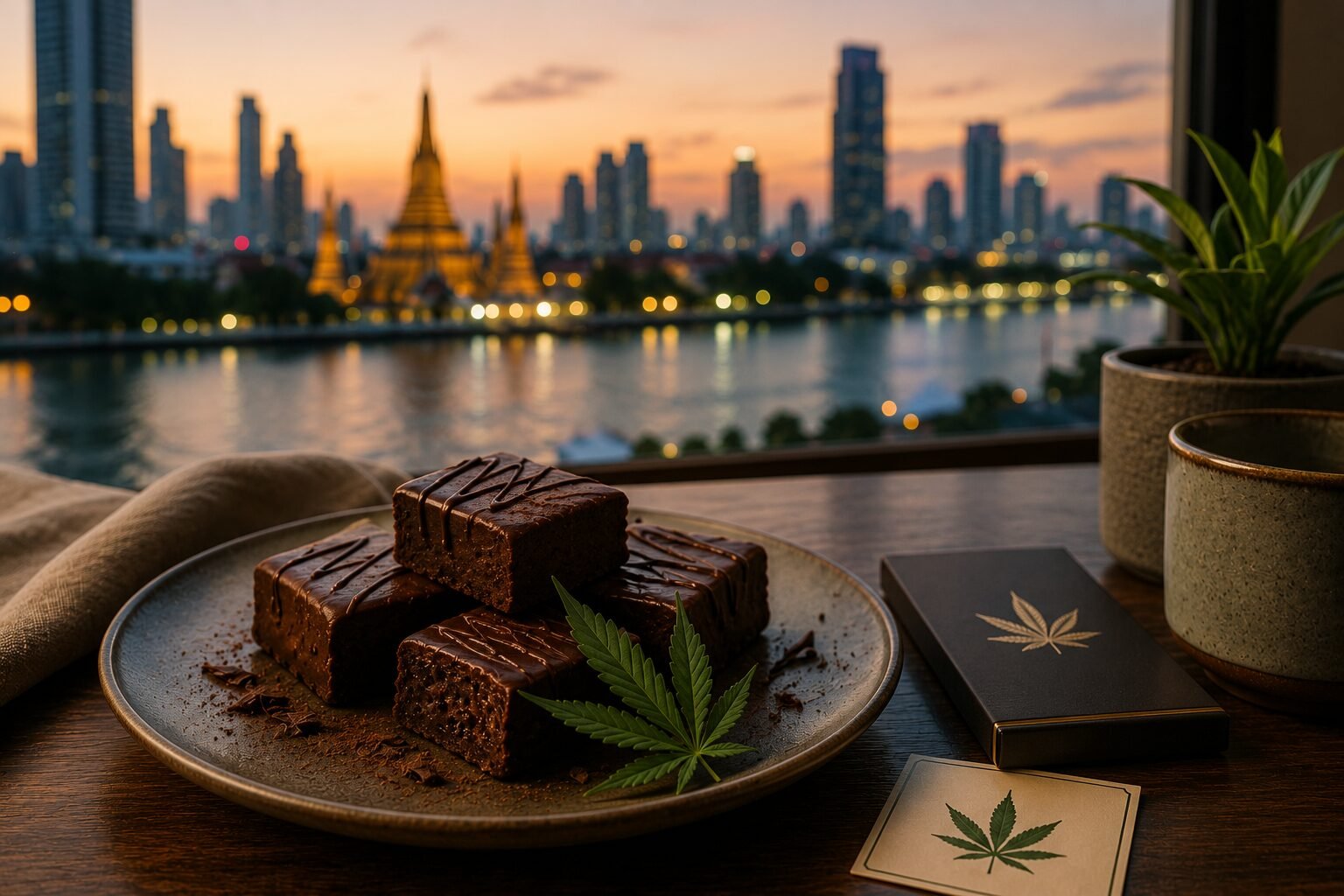
Cannabis Edibles Bangkok is a popular search because many tourists see dispensaries, delivery menus, nightlife areas, and old cannabis travel advice around the city. But edibles are not the same as flower, and Bangkok visitors should not assume gummies, brownies, cookies, or infused drinks are legal just because someone mentions them quietly.
The real concern is risk. Edibles can be hard to dose, easy to mislabel, and legally sensitive in Thailand. This shorter Bangkok guide explains what tourists should know before trusting any edible product in the city. For the full country-wide guide, read Cannabis Edibles Thailand.
Important note: Thailand’s cannabis rules are currently medical-focused. Tourists should not buy, use, carry, or transport cannabis products without valid Thai-issued medical documentation. Edible-style products can be especially risky when THC content, approval status, and labeling are unclear.
Contents:
- Why Do Tourists Ask About Cannabis Edibles in Bangkok?
- Are Cannabis Edibles Legal in Bangkok?
- Why Are Bangkok Edibles Often a Grey-Market Risk?
- Why Is Dosage the Biggest Edible Problem?
- What Edible Scams Should Bangkok Buyers Watch For?
- Why Can Carrying or Using Edibles in Bangkok Create Problems?
- What Is the Responsible Bangkok Takeaway?
Why Do Tourists Ask About Cannabis Edibles in Bangkok?
Tourists ask about cannabis edibles in Bangkok because the city has visible dispensaries, nightlife zones, delivery culture, and international visitors who may come from places where edibles are sold openly. For some travelers, edibles seem more discreet than smoking and easier to use in a hotel or city environment.
That assumption can be dangerous. Bangkok is not a free-use zone, and discreet does not automatically mean legal or safe. A product that looks like a normal snack may still create legal, health, or travel problems if it contains THC, lacks approval, or has unclear dosage.
Buyers should also remember that Bangkok is a city of hotels, malls, BTS and MRT stations, restaurants, taxis, and shared spaces. If something goes wrong after taking an edible, the customer may be far from support and surrounded by people who did not choose to be involved.
The takeaway is that edibles may look convenient, but Bangkok makes the risks more complicated because tourists often move through crowded public and semi-public spaces.
Are Cannabis Edibles Legal in Bangkok?
Bangkok follows Thailand’s national cannabis rules. Tourists should not assume that edible products are legal just because a shop, seller, or online contact says they are available. The legal status depends on approval, THC content, product type, medical documentation, and whether the product is sold through proper channels.
In general, intoxicating THC edibles are risky because products containing cannabis extract above permitted limits require permission. If an edible is strong enough to cause a noticeable high, tourists should be cautious and should not treat it like a normal snack or casual tourist purchase.
The legal confusion is one reason responsible shops avoid vague promises. If a seller cannot clearly explain whether a product is approved, what it contains, and why it is legal, that is a serious warning sign.
The takeaway is simple: availability is not proof of legality. In Bangkok, buyers should treat unclear edibles as high-risk products.
Why Are Bangkok Edibles Often a Grey-Market Risk?
Bangkok’s cannabis market is large, competitive, and tourist-facing, so grey-market products may still appear even when rules are stricter. Some products may be mentioned quietly, offered informally, or discussed through private conversations. That does not make them safe or legal.
A grey-market edible creates two layers of risk. First, the customer may not know what they are consuming. Second, the seller may not be able or willing to help if there is a problem. If a product has to be hidden or explained vaguely, the buyer should ask why.
This is especially important in tourist areas such as Sukhumvit, Asok, Nana, Khao San, Silom, and nightlife zones. These areas attract impulse buyers who may not ask enough questions before paying.
The takeaway is that behind-the-counter or unclear availability should make buyers more cautious, not more confident.
Why Is Dosage the Biggest Edible Problem?
Dosage is the biggest edible problem because effects are delayed. A person may eat one piece, feel nothing after a short time, eat more, and then become much more intoxicated than expected later. This mistake is common even in regulated cannabis markets.
In Bangkok, that delayed effect can become stressful. A tourist may be in a taxi, shopping mall, hotel lobby, restaurant, BTS station, or nightlife area when the edible starts working. If the dose is too strong, the result may be anxiety, confusion, dizziness, nausea, or panic.
Unclear dosing also makes the product impossible to trust. If a seller cannot explain THC content, serving size, onset time, duration, and ingredients, the buyer is taking a guess with their body and their travel plans.
The takeaway is that edibles are not beginner-friendly just because they look simple. Without clear dosage, they are unpredictable.
What Edible Scams Should Bangkok Buyers Watch For?
Common edible scams in Bangkok can include fake THC claims, copied packaging, homemade gummies, unmarked cookies, vague “strong” labels, and products that look more professional than they really are. A neat wrapper does not prove the product is approved, tested, or safe.
Some sellers may also use tourist pressure. They may say the product is special, limited, hidden, or only available if the customer decides quickly. That kind of urgency is not a good sign. A safe product should become clearer when you ask questions, not more secretive.
Another risk is fake CBD or THC labeling. A product may claim to be mild but feel much stronger, or claim to be strong while containing very little active ingredient. Both situations can lead to a bad experience because the buyer cannot make an informed choice.
The takeaway is that edible scams are about both money and safety. For wider warning signs, read Weed Scams Thailand.
Why Can Carrying or Using Edibles in Bangkok Create Problems?
Carrying or using questionable edibles in Bangkok can create problems because the product may not look like cannabis at first glance, but it can still raise questions if discovered. Hotels, malls, clubs, taxis, airports, and police checkpoints are all places where unclear products can become difficult to explain.
Visitors should not assume that being discreet solves the issue. If a product is not clearly legal, approved, and properly labeled, discretion does not remove the risk. It only means the buyer may not fully understand the consequences until someone asks questions.
Public use is also a bad idea. Edibles can impair judgment, and Bangkok’s busy streets, public transport, nightlife, and traffic make that worse. A tourist who feels unwell or confused in public may attract attention and create unnecessary problems.
The takeaway is that Bangkok is not the place to gamble with unclear edible products. Responsible travelers avoid situations they cannot confidently explain.
What Is the Responsible Bangkok Takeaway?
The responsible takeaway is to avoid cannabis edibles in Bangkok unless the product is clearly legal, approved, properly labeled, medically appropriate, and compliant with current Thai rules. If the seller cannot explain those points clearly, the safest choice is to walk away.
Bangkok buyers should focus on education first. Understand THC vs CBD, legal limits, medical documentation, dosage risk, hotel rules, public behavior, and scam warning signs. Do not treat old online advice or another tourist’s behavior as proof that something is safe.
WeedBKK can help customers understand cannabis product information, responsible service expectations, and safer buying questions, but it should not be seen as a shortcut around Thai law. The best customer is informed, discreet, respectful, and careful.
The final takeaway is simple: cannabis edibles in Bangkok are legally and practically risky. For the full national guide, read Cannabis Edibles Thailand. For public behavior guidance, read Cannabis Etiquette Thailand. For scam warnings, read Weed Scams Thailand.