
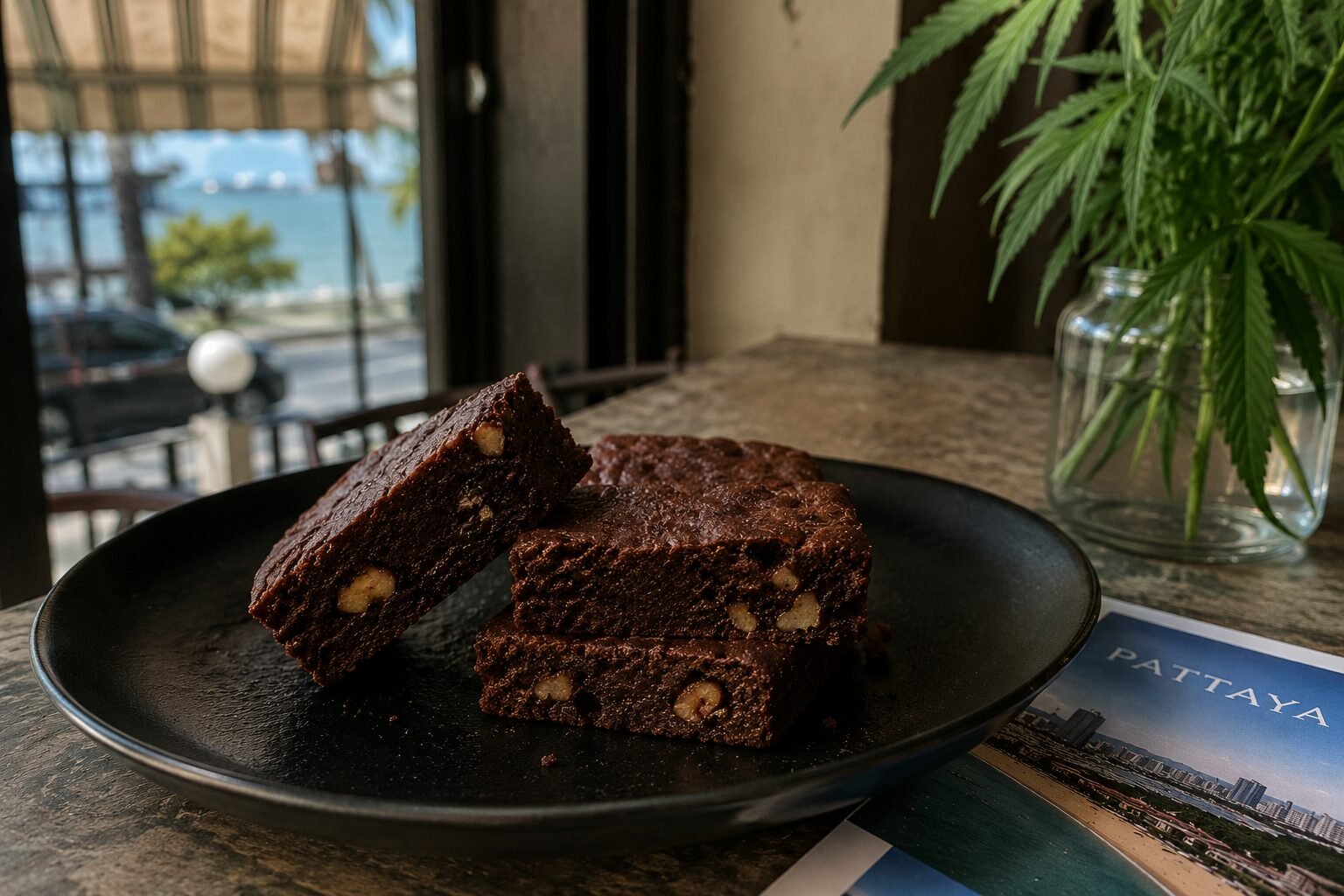
Cannabis Edibles Pattaya is a risky topic because Pattaya attracts short-stay tourists, nightlife visitors, beach travelers, and people who may already be in a relaxed holiday mood. Some visitors hear that edibles are discreet, easy to carry, or easier than smoking, but that does not mean they are legal, safe, or smart to use in Thailand.
The biggest problem with edibles in Pattaya is the mix of legal uncertainty, unclear dosage, nightlife pressure, alcohol, hotels, and tourist scams. A product that looks like a brownie, gummy, cookie, or chocolate can still contain THC, lack proper approval, and create a serious problem if the dose is unknown. For the full country-wide explanation, read Cannabis Edibles Thailand.
Important note: Thailand’s cannabis rules are currently medical-focused. Tourists should not buy, use, carry, or transport cannabis products without valid Thai-issued medical documentation. Edible-style products can be especially risky when THC content, approval status, and labeling are unclear.
Contents:
- Why Should Tourists Be Careful With Cannabis Edibles in Pattaya?
- Are Cannabis Edibles Legal in Pattaya?
- Why Are Edibles Riskier in Pattaya Nightlife Areas?
- Why Is Dosage Hard to Trust With Edibles?
- What Pattaya Edible Scams Should Tourists Watch For?
- Why Do Hotels, Bags, and Public Areas Matter?
- What Is the Safe Pattaya Takeaway?
Why Should Tourists Be Careful With Cannabis Edibles in Pattaya?
Tourists should be careful with cannabis edibles in Pattaya because the city creates the perfect conditions for bad decisions. Many visitors are staying near hotels, bars, beaches, nightlife streets, or short-term rentals. They may be drinking, walking late at night, or buying impulsively without checking the product properly.
Edibles can also feel harmless because they look like normal food. A chocolate, brownie, gummy, cookie, or infused drink does not look as obvious as flower or smoke. That appearance can make tourists underestimate the risk, especially if the seller describes it casually or says it is “not a big deal.”
The problem is that edibles can affect people strongly and unpredictably. If the dose is unclear, a tourist may feel fine at first, take more, and then become uncomfortable later in a hotel, taxi, bar, beach area, or public street. In a city like Pattaya, that can become stressful very quickly.
The takeaway is simple: Pattaya is a fun city, but it is not the place to gamble with unclear cannabis edibles.
Are Cannabis Edibles Legal in Pattaya?
Pattaya follows Thailand’s national cannabis rules. There is no special Pattaya exception that makes cannabis edibles freely legal for tourists. If a product contains THC, uses cannabis extract, or is strong enough to cause intoxication, buyers should treat it as legally sensitive unless the seller can clearly prove it is approved, compliant, properly labeled, and suitable under current rules.
This is especially important because edible products are often harder to understand than flower. A flower product may at least be visible as cannabis, but an edible may look like a snack. That makes approval status, THC content, ingredients, dosage, and source even more important.
If a seller cannot clearly explain whether the product is legal, what it contains, how it is dosed, and why it is safe to buy, that should be treated as a warning sign. “Everyone does it” or “tourists buy it all the time” is not a legal explanation.
The takeaway is that availability is not proof of legality. In Pattaya, tourists should treat unclear edibles as high-risk products.
Why Are Edibles Riskier in Pattaya Nightlife Areas?
Edibles are riskier in Pattaya nightlife areas because the effects are delayed and can last longer than expected. A tourist may take an edible before going out, feel nothing after 30 minutes, take more, and then become overwhelmed later in a loud bar, crowded street, taxi, hotel lobby, or beach area.
Alcohol makes this worse. Pattaya nightlife often involves drinking, late nights, heat, noise, and unfamiliar surroundings. Mixing an unknown edible with alcohol can increase confusion, anxiety, nausea, poor judgment, and unsafe behavior. Even experienced travelers can make mistakes when the dose is unknown.
Nightlife areas also attract attention. If someone becomes visibly unwell, confused, loud, or difficult to manage, staff, security, police, or hotel workers may become involved. What started as a private choice can become a public problem very quickly.
The takeaway is that edibles and nightlife are a risky combination. Delayed effects, alcohol, crowds, and unclear dosage make Pattaya a poor place to experiment.
Why Is Dosage Hard to Trust With Edibles?
Dosage is the biggest edible problem because many grey-market products do not provide reliable information. A seller may say a brownie, gummy, chocolate, or cookie is “strong,” “mild,” or “good for beginners,” but those words are not enough. Buyers need clear THC content, serving size, onset time, duration, and ingredient information.
With homemade or informal products, the THC may not be evenly distributed. One piece may be weaker while another piece is much stronger. A tourist cannot tell by looking. This makes edible products more unpredictable than many buyers expect.
Another issue is copied or fake packaging. A product may look professionally wrapped, but that does not prove it was tested, approved, or legally sold. Packaging can be copied easily, while quality control is much harder to verify.
The takeaway is that an edible without clear dosage is not a controlled experience. It is a guess, and in Pattaya that guess can go wrong in a very public way.
What Pattaya Edible Scams Should Tourists Watch For?
Pattaya edible scams often target tourists who want something discreet, easy, or exciting. A seller may claim a product is “special,” “hidden,” “extra strong,” “imported,” or “only available today.” These phrases create urgency, but they do not prove legality, quality, or safety.
Common warning signs include no dosage label, no ingredient list, no approval information, fake THC numbers, copied packaging, candy-style products, homemade cookies, and sellers who avoid direct questions. Another red flag is a product that is presented as secret or behind-the-counter. Secrecy should make buyers more cautious, not more confident.
Tourists should also be careful with products that look too much like normal candy or snacks. These products can be easy to misplace, share accidentally, or carry without thinking. That is one reason edibles became such a sensitive public-health and youth-access issue in Thailand.
The takeaway is that edible scams are not only about losing money. They can lead to a bad physical reaction, legal uncertainty, and travel disruption. For wider scam warnings, read Weed Scams Thailand.
Why Do Hotels, Bags, and Public Areas Matter?
Hotels, bags, and public areas matter because unclear edible products can be difficult to explain if questioned. A tourist may think a small chocolate, gummy, or brownie is private, but if it contains THC and lacks proper labeling or approval, it can create problems in a hotel, taxi, club, beach area, airport route, or public space.
Hotel rules also matter. A guest who becomes unwell, confused, or disruptive after taking an edible may involve front desk staff, security, or emergency services. Even if the product is not obvious at first, the behavior that follows can still create attention.
Public use is also a bad idea. Pattaya has busy beaches, nightlife streets, restaurants, transport areas, and family zones. A tourist who is impaired in public may disturb others or put themselves in an unsafe situation. Responsible visitors should avoid anything that could create public disruption.
The takeaway is that discreet does not mean risk-free. For broader behavior guidance, read Cannabis Etiquette Thailand.
What Is the Safe Pattaya Takeaway?
The safe Pattaya takeaway is to avoid cannabis edibles unless the product is clearly legal, approved, properly labeled, medically appropriate, and compliant with current Thai rules. If the seller cannot explain those details clearly, the responsible choice is to walk away.
Tourists should be especially cautious in Pattaya because nightlife, alcohol, hotels, beach areas, and short-stay travel can make edible mistakes harder to manage. Do not rely on old online advice, random tourist stories, or a seller saying “don’t worry.” Responsible cannabis decisions require clear information.
WeedBKK can help customers understand cannabis product information, responsible service expectations, and safer buying questions, but it should never be treated as a shortcut around Thai law. The best customer is informed, respectful, and careful about where and how cannabis products are handled.
The final takeaway is simple: cannabis edibles in Pattaya are legally and practically risky. For the full national guide, read Cannabis Edibles Thailand. For public behavior guidance, read Cannabis Etiquette Thailand. For scam warnings, read Weed Scams Thailand.